Shipping a vehicle sounds simple—until you have to choose between open vs enclosed transport, door-to-door vs terminal delivery, standard vs expedited timelines, and (for international moves) ocean vs air shipping. The “right” method depends on what you’re protecting (budget, time, condition, and risk tolerance), not just distance.
This guide breaks down the most common vehicle transportation methods, explains when each one makes sense, and gives a practical decision framework. Whether you’re relocating for work, buying a car from another state, moving a classic vehicle, or coordinating a fleet, the goal is the same: predictable timing, clear responsibilities, and a car that arrives in the expected condition.
Quick Definition: “Vehicle Transportation Method”
A vehicle transportation method is the way your car physically moves from origin to destination and how the service is structured. In practice, you’re choosing:
- Carrier type: Open carrier vs enclosed carrier.
- Service style: Door-to-door vs terminal-to-terminal.
- Speed: Standard vs expedited shipping.
- Mode: Road (truck), rail, ocean, or air (mostly for international/urgent scenarios).
- Operational fit: Operable vs inoperable vehicles; specialty handling for low-clearance or oversized vehicles.
The Main Methods (What They Are)
Most domestic vehicle shipments are moved by truck on a multi-car carrier. Everything else—enclosed protection, terminals, rail, ocean, air—adds a layer of trade-offs (cost, speed, or risk control).
1) Open carrier (most common)
Open carrier transport ships your car on an open, multi-vehicle trailer (like the trucks that deliver new cars to dealerships). It’s the most common option for standard vehicles because it’s typically the most cost-efficient and widely available.
- Best for: Daily drivers, common SUVs/sedans, flexible schedules, budget-focused shipping.
- Main trade-off: Exposure to weather and road debris (normal wear risk is higher than enclosed).
2) Enclosed carrier (higher protection)
Enclosed transport ships your vehicle inside a covered trailer. It’s chosen when the vehicle’s value, rarity, finish, or condition makes exposure unacceptable (classic cars, luxury cars, fresh paint, show vehicles).
- Best for: Collector cars, exotic/luxury vehicles, new paintwork, vehicles with high sentimental value.
- Main trade-off: Higher cost and sometimes less availability (especially on niche routes).
3) Door-to-door delivery (most convenient)
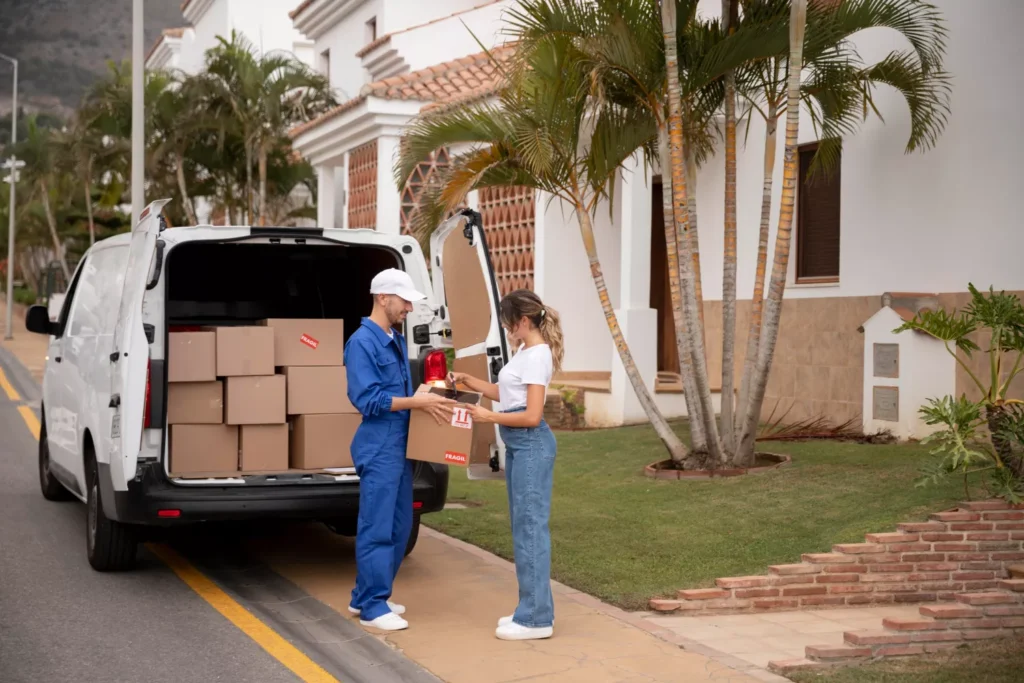
Door-to-door means pickup and delivery occur as close as feasible to the addresses provided. This is usually the smoothest option for customers because it reduces transfers and keeps custody simple.
- Best for: Residential moves, people coordinating a household relocation, time-constrained schedules.
- Main trade-off: Large carriers may not access tight streets, low trees, gated communities, or downtown loading restrictions—so the “door” may become a nearby meeting point.
4) Terminal-to-terminal (sometimes cheaper, sometimes not)
Terminal shipping requires you to drop off and/or pick up your vehicle at a designated location. It can reduce complexity when residential access is difficult, and it may help if you can align with the terminal’s schedule.
- Best for: Dense urban areas, restricted neighborhoods, customers who can self-manage drop-off/pick-up.
- Main trade-off: More customer coordination and potential storage/handling time at the terminal.
5) Expedited shipping (time-focused)
Expedited services prioritize your shipment in scheduling and dispatch. This can mean faster pickup, faster delivery, or both—depending on route and carrier availability.
- Best for: Job start dates, lease deadlines, auctions, or tight move-in windows.
- Main trade-off: Higher cost; less flexibility for last-minute changes.
6) Rail transport (select corridors, often paired with trucking)
Rail can be used for vehicle transport in certain corridors (often for bulk/fleet or specific consumer offerings), typically with trucking on the first/last mile. Think of rail as a “middle leg” that may reduce some costs on long distances but introduces fixed schedules and transfer points.
7) Ocean shipping (international moves)
For international vehicle shipping, ocean is the standard. Two common approaches are:
- RoRo (Roll-on/Roll-off): The vehicle is driven onto a vessel and secured.
- Container shipping: The vehicle is loaded into a container (alone or shared), which can add protection and flexibility depending on the plan.
8) Air freight (rare, premium, urgent)
Air freight is used when speed is the priority and budget allows—usually for urgent international needs or extremely high-value vehicles. It’s typically the fastest method, but cost is the limiting factor.
Method Comparison Table (Pick the Best Fit)
| Method | Best for | Pros | Trade-offs |
|---|---|---|---|
| Open carrier | Most standard vehicles; cost-sensitive moves. | Good availability; typically the most budget-friendly; efficient on common routes. | Less protection from weather/road debris. |
| Enclosed carrier | Classic, luxury, exotic, or pristine vehicles. | More protection; better for low-tolerance risk shipments. | Higher cost; fewer carriers/routes. |
| Door-to-door | Most customers; household relocations. | Convenient; fewer transfers; simpler custody. | May require a nearby meet point if access is restricted. |
| Terminal-to-terminal | Dense cities; restricted neighborhoods. | Can simplify access; can help scheduling in complex areas. | More customer effort; possible terminal handling time. |
| Expedited | Tight deadlines; urgent pickup needs. | Faster scheduling; priority dispatch planning. | Higher cost; less flexibility. |
| Rail (hybrid) | Some long-distance corridors; certain bulk needs. | Efficient long-haul middle leg in the right lanes. | Transfers + fixed schedules; often still needs trucking. |
| Ocean (RoRo / container) | International shipping. | Most practical international method; container can add structure. | Port procedures, paperwork, and longer lead times. |
| Air freight | Urgent, premium international needs. | Fastest method end-to-end. | Highest cost; strict documentation/constraints. |
Decision Framework: Choose in 5 Questions
If you’re unsure where to start, answer these five questions. The combination will usually point clearly to the correct method.
- 1) What is the vehicle’s “risk profile”? Daily driver (open) vs high-value/collector (enclosed).
- 2) How strict is your timeline? Flexible window (standard) vs fixed deadline (expedited).
- 3) Is it operable? Inoperable vehicles often need special loading equipment and add constraints.
- 4) What are the pickup/delivery access constraints? Tight streets, low trees, steep driveways, downtown rules, gated access.
- 5) Is this domestic or international? Domestic is usually truck-based; international typically adds ocean/air plus paperwork.
Simple rule: If you’d be upset about one extra scratch, don’t ship it open. If you can’t miss a date, don’t ship without a buffer plan.
Special Cases (What to Do Differently)
Classic cars, exotics, and show vehicles
Choose enclosed transport, avoid last-minute scheduling, and insist on clear documentation at pickup. For low-clearance vehicles, confirm ramp angles and loading methods ahead of time to prevent underbody contact.
EVs (electric vehicles)
Confirm the battery charge preference at pickup, disable remote features that may drain battery, and ensure you have the right access/keys available. If the EV is very low clearance, treat it like a specialty vehicle.
Inoperable vehicles
Inoperable (non-running) vehicles can be shipped, but require planning: winches, specific carrier equipment, and accurate disclosure so dispatch doesn’t fail on pickup day.
Dealership purchases and online car buys
Confirm the pickup contact, hours, and paperwork release process. Many pickups fail because the driver arrives before a vehicle is released or the correct person isn’t available to sign.
What Impacts Cost (Without Guessing Numbers)
Vehicle shipping prices change based on route demand, seasonality, and the exact service constraints. Instead of chasing a “typical price,” focus on the levers that move quotes up or down.
- Distance and route popularity: Major corridors are usually more efficient than niche lanes.
- Open vs enclosed: Enclosed generally costs more due to protection and capacity limits.
- Timeline: Expedited service usually increases cost.
- Vehicle size/weight: Larger vehicles consume more space and may limit load planning.
- Operability: Inoperable vehicles often cost more due to equipment/time.
- Access constraints: Long carries, tight streets, and meet-point coordination add complexity.
- Seasonality: Peak moving seasons can tighten capacity and increase rates.
Vehicle Shipping Checklist (Before, During, After)
Before booking
- Choose your method: open vs enclosed; door-to-door vs terminal; standard vs expedited.
- Confirm operable vs inoperable (be accurate—dispatch depends on this).
- Write down pickup/delivery constraints: gate codes, truck restrictions, low branches, narrow streets.
- Set your availability window and decision-maker contact.
- Ask what documentation is needed at pickup/delivery.
Vehicle prep (1–2 days before pickup)
- Wash the exterior so any existing scratches are visible for inspection.
- Photograph the car from all angles in good light (plus wheels, roof, bumpers).
- Remove personal items and valuables.
- Disable alarms and set aside spare keys if needed.
- Check tire pressure, fluid leaks, and battery condition (especially for older vehicles).
- Keep fuel low (commonly around a quarter tank) unless you’re instructed otherwise.
Pickup day
- Meet the driver on time and do a walkaround inspection together.
- Confirm the vehicle condition record and keep a copy.
- Confirm where delivery will happen (exact address vs meet point).
- Share the best delivery contact and backup contact.
Delivery day
- Inspect before signing off; compare against your pickup photos.
- Check common contact points: bumpers, rocker panels, mirrors, wheels.
- Confirm you have all keys and any included accessories.
- Document any issues immediately with photos and notes.
Frequently Asked Questions
1) Is open transport safe?
Open transport is widely used and suitable for most standard vehicles, but it provides less protection from weather and road debris than enclosed shipping.
2) When should you choose enclosed transport?
Choose enclosed shipping when you want higher protection due to the vehicle’s value, rarity, condition, or sensitivity (classic, luxury, exotic, show car, new paint).
3) Is door-to-door always possible?
Door-to-door is usually possible, but large carriers may require a nearby meet point in areas with tight streets, low trees, steep grades, or strict loading rules.
4) Can you ship a non-running car?
Yes, but you must disclose it upfront so the right equipment (like a winch) is scheduled—otherwise pickup can fail and timelines slip.
5) What’s the biggest cause of delays?
Access constraints and scheduling windows that don’t match real-world pickup/delivery conditions (gates, narrow roads, terminal hours, missing contacts).
6) Should you ship personal items in the car?
It’s usually best not to. Personal items can shift, get damaged, or complicate liability and inspection—keep the vehicle clear unless your provider explicitly allows it.
7) How should you document the vehicle condition?
Wash the car, take detailed photos in good lighting, and do a walkaround inspection at pickup and delivery.
8) What’s the best method for a tight deadline?
Expedited shipping (plus a realistic access plan) is usually the safest approach when you have a hard delivery requirement.
Direct Pro Logistics: Vehicle Transport Planning Support
Direct Pro Logistics can help you select the right vehicle transportation method based on your timeline, vehicle type, protection needs, and pickup/delivery constraints—then coordinate a controlled plan so there are fewer surprises on pickup and delivery days.
To get an accurate plan quickly, prepare: (1) vehicle year/make/model + operable status, (2) pickup and delivery zip codes + access notes (tight street, gate, steep driveway), and (3) your preferred pickup window.