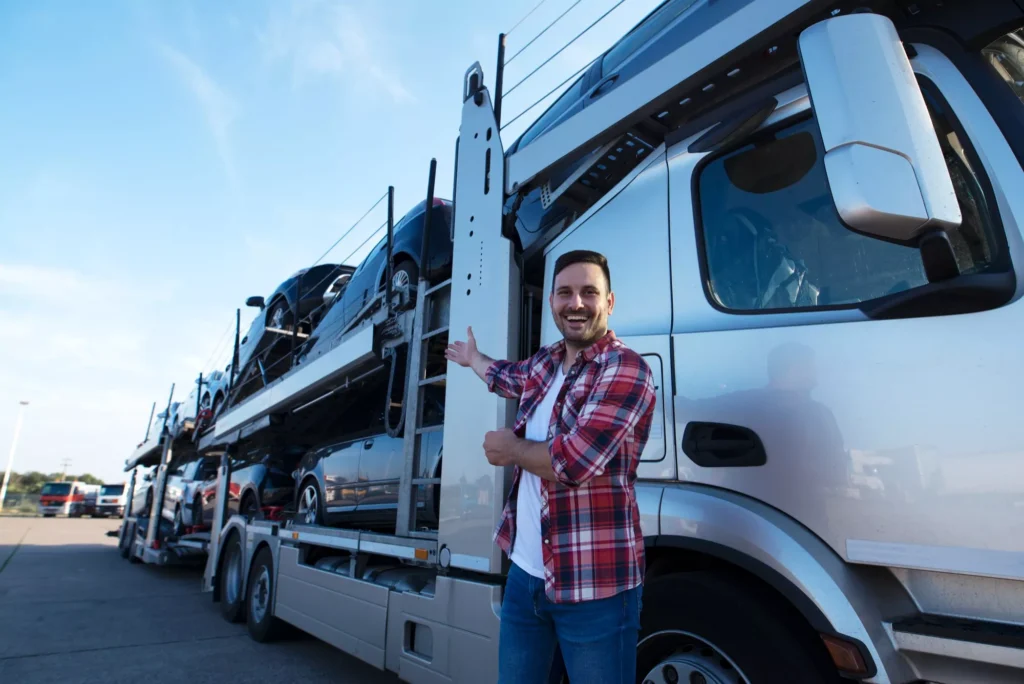
Transporting a modified or custom vehicle is not the same as shipping a stock car. Lowered suspension, lift kits, widebody kits, splitters, diffusers, roof gear, aftermarket bumpers, and custom paint all change clearance, loading angles, and safe securement points—where most damage and delays happen.
This 2026 guide explains how to transport modified and custom vehicles safely and securely, how to choose the right shipping method, what to tell dispatch so the correct carrier shows up, and how to prevent the most common damage scenarios (scrapes, cracked lips, strap marks, and failed pickups).
What “Modified Vehicle Shipping” Really Means
Modified vehicle transport is really a planning problem. You’re not just paying for distance—you’re paying for correct equipment selection, controlled loading/unloading, and a securement plan that respects your build’s geometry.
- Geometry changes: Clearance, overhang, width, and height determine whether the vehicle can be loaded safely.
- Securement sensitivity: Some builds can’t tolerate strap contact near aero, carbon edges, or fragile trim.
- Access constraints: Large carriers can’t always enter tight residential streets, steep driveways, or gated areas.
- Cosmetic tolerance: If small marks are unacceptable (fresh paint/wrap/PPF), the transport method should reflect that.
Why Modified Vehicles Get Damaged (And How to Prevent It)
Most damage happens during loading and unloading—not in the middle of the route. A good plan removes improvisation and protects the vehicle at the exact moments where risk is highest.
- Ramp transition scrapes: The “breakover point” is where lips and underbodies contact ramps and trailer edges.
- Angle mistakes: Loading straight-on can be wrong for long overhang builds; angled entry can reduce contact risk.
- Fit/slot mistakes: Wide or tall builds may not fit certain carrier positions, causing last-minute changes.
- Bad information: If dispatch doesn’t know the car is low/wide/lifted/inoperable, the wrong equipment gets sent.
Safest Transport Methods (Match Your Build)
Use this table to choose the correct method based on risk—not guessing. Direct Pro Logistics plans around the vehicle’s real constraints so the carrier selection and loading plan match your build.
| Build type | Best for | Safest method | What to confirm |
|---|---|---|---|
| Lowered cars (lip/body kit/splitter) | Low clearance with sensitive front aero. | Enclosed preferred + door-to-door meet point planning. | Lowest point clearance, front overhang, ramp angle plan, and meet point if street is tight. |
| Widebody / spacers / wide wheels | Extra width and tight wheel/tire clearances. | Enclosed preferred (clearance planning) or specialty lane planning. | Overall width, wheel/tire specs, and any “no-touch” zones (carbon, aero edges). |
| Lifted trucks/SUVs | Extra height and heavier profiles. | Open or enclosed (confirm height and slot fit first). | Overall height, tire size, roof accessories, and whether it fits the assigned carrier position. |
| Roof rack / light bar / rooftop tent | Builds with added rooftop height. | Open or enclosed depending on measured height and trailer clearance. | Exact overall height and whether accessories can be removed before pickup. |
| Fresh paint / new wrap / show vehicle | Low cosmetic tolerance. | Enclosed recommended. | Curing concerns, preferred securement approach, and inspection process at pickup/delivery. |
| Inoperable modified vehicle | Non-running or limited mobility builds. | Winch-equipped carrier + controlled loading plan. | Be specific: starts? rolls? steers? brakes? parking brake? battery stable? |
Side-by-Side Comparison (What Matters Most)
This matrix focuses on what directly impacts outcomes: protection, fit reliability, and how controlled the loading process will be.
| Factor | Enclosed transport | Open transport | Winch/flatbed (special) |
|---|---|---|---|
| Protection level | High – best for cosmetic tolerance and sensitive builds. | Medium – exposed to weather/debris; common for daily drivers. | Varies – depends on configuration; used for special cases. |
| Best for low clearance | Strong – controlled handling and planning. | Varies – possible, but margins are tighter for slammed builds. | Strong – when the loading plan must be extremely controlled. |
| Fit predictability | High – better planning for width/height constraints. | Medium – slot fit can vary based on lane and equipment. | High – used when standard options don’t fit safely. |
| Budget efficiency | Lower – higher cost for protection and control. | Higher – typically the most cost-efficient. | Varies – depends on equipment and distance. |
| When it’s the right call | Widebody, low clearance, show car, fresh paint/wrap, high value. | Stock or mildly modified daily drivers with normal clearance. | Inoperable, extreme clearance cases, or when a standard load would be risky. |
What to Share With Dispatch (So the Right Carrier Shows Up)
Most “modified vehicle delays” are dispatch mismatches. This short list prevents wrong equipment, failed pickups, and rushed loading decisions.
- Modification list: Lowered/lifted, splitter/diffuser, wide wheels/tires/spacers, roof gear, bumpers, sliders, skid plates.
- Low-point photo set: Front low angle, side profile, rear low angle, and the lowest point close-up.
- Measurements: Overall height (especially with roof gear), approximate clearance at the lowest point, and width if widened.
- Operability: Starts? rolls? steers? brakes? parking brake? battery stable?
- Access constraints: Tight street, steep driveway, low trees, gate codes, downtown loading rules.
Pickup & Delivery Control Plan (Where You Win or Lose)
This table is the “controlled execution” checklist: what to do before pickup, during pickup, and at delivery to protect your build.
| Stage | Do this | Avoid this | Why it matters |
|---|---|---|---|
| Before pickup day | Share photos + measurements + modification list; confirm meet point if access is tight. | Disclosing “lowered/wide” only when the driver arrives. | Pre-dispatch planning prevents wrong equipment and failed pickup attempts. |
| Pickup walkaround | Point out sensitive zones: splitter edges, rocker panels, bumper corners, wide wheels. | Assuming the driver will identify all low points without guidance. | Clarity reduces scrape risk and keeps loading controlled. |
| Loading | Use a flat meet point when needed; keep the approach slow and controlled. | Rushed loading on a steep driveway or tight street. | Most cosmetic damage happens during loading/unloading transitions. |
| Delivery inspection | Inspect before sign-off; compare to pickup photos; check low points and wheels first. | Signing first and inspecting later. | Clean inspection protects both sides and speeds resolution if something is off. |
Modified Vehicle Shipping Checklist (Before Pickup)
- Wash the vehicle: Makes existing marks visible and improves inspection accuracy.
- Remove/secure loose parts: Quick-release lips, detachable accessories, anything that can shift.
- Photo documentation: All sides + close-ups of aero edges, wheels, and the lowest point.
- Confirm operability: If anything is limited, disclose it clearly so the right equipment is dispatched.
- Access plan: Gate codes, street restrictions, steep driveway, low trees, plus a meet point pin if needed.
- Two contacts: Primary + backup contact reachable during the pickup window.
Frequently Asked Questions
1) Should I ship my modified vehicle enclosed?
If the vehicle is low, wide, freshly painted/wrapped, or high value, enclosed transport is usually the safer choice because it reduces exposure and improves handling control.
2) What causes pickup failures for modified cars?
Dispatch mismatch: the carrier arrives and the vehicle can’t be safely loaded due to clearance, width/height fit, access constraints, or undisclosed inoperable status.
3) Can a slammed/very low car be shipped safely?
Yes—but it must be treated as a specialty shipment with controlled angles and a low-clearance loading plan.
4) Do I need to measure my vehicle?
Yes. A simple height/clearance/width snapshot prevents wrong equipment and reduces last-minute changes.
5) What photos matter most?
All sides, bumpers, wheels, rocker panels, splitter edges, and the lowest point close-up in good lighting.
6) What should I tell dispatch for air suspension?
Tell dispatch it’s on air, the lowest ride height, and whether it can be raised for loading.
7) What’s the biggest mistake people make?
Waiting until pickup day to disclose the build’s real constraints (low clearance, width, roof height, or inoperable status).
8) What does Direct Pro Logistics need for an accurate plan?
Year/make/model, operable status, modification list, photos of low points, height/clearance/width details, and pickup/delivery ZIP codes with access notes.
Direct Pro Logistics: Modified Vehicle Transport Support
Direct Pro Logistics supports modified and custom vehicle shipments with a protection-first, planning-driven approach: accurate scope intake, access planning, and dispatch alignment so the right equipment and handling plan is in place before pickup day.
To get a fast, accurate plan, prepare: (1) year/make/model + operable status, (2) modification list + photos, (3) key measurements (height/clearance/width), and (4) pickup/delivery ZIP codes + access constraints.