Packing is the part of moving that makes people underestimate everything: time, energy, supplies, and how stressful it feels when you can’t find basics like chargers, toiletries, or a single clean plate on the first night. The good news is that packing isn’t “hard”—it’s a system. When you pack room-by-room, label consistently, and keep essentials separate, you avoid the chaos that causes broken items, missing boxes, and hours of wasted time on move-in day. A solid plan also helps movers do their job faster because they can load and unload with less guessing.
This long guide gives you a complete, repeatable packing process. You’ll get (1) a practical supplies checklist, (2) a room-by-room packing checklist (kitchen, bedroom, bathroom, living room, office, garage/storage), (3) the best box labeling systems (including a color-code + box numbering inventory), (4) the “open first” essentials box strategy, and (5) the most common packing mistakes that create damage and delays. Follow this and you’ll pack faster, protect your belongings, and make move-in day dramatically smoother.
Before You Pack: Supplies Checklist
Start by gathering quality supplies early (don’t rely on weak boxes and cheap tape). A room-by-room plan works best when you’re not stopping every hour to run to the store for more tape. Extra Space Storage recommends having sturdy boxes, packing tape, bubble wrap, moving blankets/pads, and other protective supplies ready before you begin. [page:0]
- Boxes: small (books/heavy), medium (most items), large (light bulky items), wardrobe boxes (hanging clothes).
- Protection: packing paper, bubble wrap, towels/blankets (also work as padding).
- Tools: strong packing tape, tape gun, scissors/box cutter, permanent markers.
- Organization: color tape/labels, sticky notes, zip-top bags for screws/parts, a marker for “FRAGILE/THIS SIDE UP.”
- Optional but powerful: stretch wrap for furniture, mattress covers, label printer, inventory spreadsheet (Google Sheets).
Pro tip: keep one “packing toolkit” (tape, markers, scissors, labels, bags) and move it from room to room. You’ll save hours.
Your Packing Timeline (Simple and Realistic)
The easiest way to pack is to start with the least-used spaces and save daily essentials for last. Extra Space Storage recommends starting early, tackling least-used rooms first, decluttering as you go, labeling clearly, and packing a “first night” essentials box. [page:0]
- 3–4 weeks out: Declutter, pack storage areas, seasonal items, décor, books, rarely used kitchenware.
- 2 weeks out: Pack most rooms, leave only core daily-use items out.
- 1 week out: Pack almost everything, confirm supplies, build “open first” essentials boxes.
- Moving day: Pack last essentials, do a final walkthrough, keep valuables/documents with you.
Best Way to Label Moving Boxes (So Unpacking Is Easy)
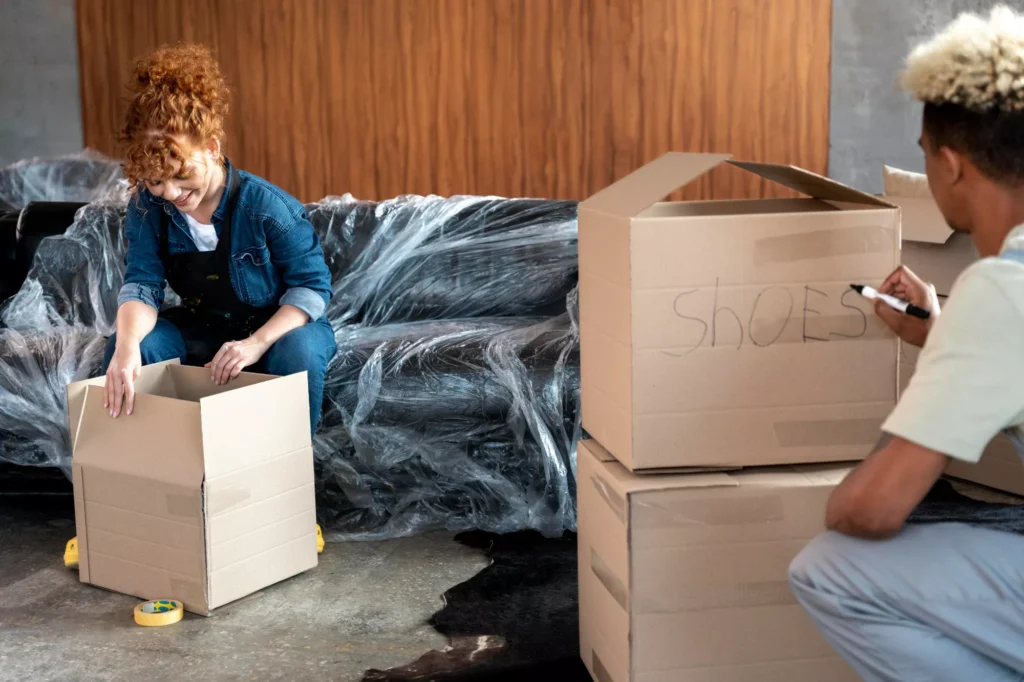
Labeling is the difference between an organized move and a stressful scavenger hunt. moveBuddha recommends using a permanent marker and writing clearly, including the destination room and contents on multiple sides, adding special instructions like “Fragile” or “This Side Up,” and optionally color-coding by room. [page:1]
What to Write on Every Box
- Destination room: Where it goes in the new home (not where it came from). [page:1]
- Contents summary: “Plates & bowls” / “Shower supplies” / “Office cables.” [page:1]
- Special handling: FRAGILE, THIS SIDE UP, HEAVY/TEAM LIFT, OPEN FIRST. [page:1]
- Box number (optional but recommended): helps track everything with an inventory. [page:1]
Where to Put Labels (Visibility Matters)
Labels should be readable even when boxes are stacked. moveBuddha advises labeling on the top and two adjacent sides (three sides total) so at least one label is always visible. [page:1]
Two Labeling Systems That Work
- Color code by room: Assign each room a color and use matching tape/labels; post matching colored signs on doors in the new home so helpers drop boxes correctly. [page:1]
- Numbered boxes + inventory spreadsheet: Give every box a number and track Room, Contents, Special Instructions in a spreadsheet for full control (and easier claims if something goes missing). [page:1]
Pro move: combine both. Example: “Kitchen (RED) — Box 12 — Plates/Glasses — FRAGILE.”
Pack an “Open First” Essentials Box (Do This No Matter What)
One of the highest-ROI packing moves is your “first night” box. Extra Space Storage specifically recommends packing an essentials box with must-haves like toiletries, a change of clothes, basic cookware, important documents, and chargers so you can function immediately when you arrive. [page:0]
- Personal essentials: toothbrush/toothpaste, soap, toilet paper, medications, contacts/glasses.
- Tech: phone chargers, power strip, Wi-Fi info, laptop charger.
- Kitchen basics: 2 plates, 2 cups, 1 pan, 1 knife, coffee/tea, dish soap, sponge.
- Move-day items: box cutter, trash bags, paper towels, cleaning wipes, tape, markers.
- Documents & keys: lease, IDs, moving paperwork, spare keys (keep with you).
Make it impossible to miss: label it “OPEN FIRST” on every side, and keep it in your car (not the truck).
Want a Stress-Free Move?
Direct Pro Logistics helps you move faster and safer—so your packing effort actually pays off on move day.
Get a Moving Quote →Room-by-Room Packing Checklist
Packing room-by-room keeps momentum and prevents half-packed chaos. Extra Space Storage outlines a full room-by-room checklist and suggests breaking packing down by each area of your home to stay organized and reduce stress. [page:0]
Living Room
- Disassemble big items: remove table legs, shelving pieces; tape screws/bolts in labeled bags to the furniture. [page:0]
- Protect furniture: wrap couches/chairs/tables in moving blankets or sheets to prevent scratches/tears. [page:0]
- Electronics: use original boxes if possible; wrap and cushion if not; coil and label cables and tape them to the device in a bag. [page:0]
- Books: pack in small boxes and label “HEAVY.” [page:0]
Kitchen
- Dishes & glassware: wrap individually; pack vertically with padding; label boxes FRAGILE. [page:0]
- Knives: wrap sharp knives in thick cloth or packing paper and tape securely. [page:0]
- Small appliances: clean and dry; remove loose parts; cushion well in boxes. [page:0]
- Pantry: seal open packages; use small boxes for cans/jars so weight stays manageable. [page:0]
Bedrooms
- Clothes: pack off-season first; use wardrobe boxes for hanging clothes; use suitcases for overflow. [page:0]
- Bedding: keep one set of sheets out for the last night; pack extras early. [page:0]
- Bed frames: disassemble if possible; keep screws/brackets in a labeled bag taped to the frame. [page:0]
- Valuables: jewelry and important items should stay with you during the move. [page:0]
Bathrooms
- Liquids: tighten caps, bag each bottle to prevent leaks, keep upright if possible. [page:0]
- Medications: carry critical medications with you, not on the truck. [page:0]
- Towels: use towels as padding for fragile items, then pack the rest. [page:0]
Home Office
- Documents: collect vital papers and carry them with you in a secure folder/lockbox. [page:0]
- Computers: back up data; label cords; pack in snug boxes with padding. [page:0]
- Printers: remove ink/toner cartridges to prevent spills during transit. [page:0]
Garage / Storage
- Start here first: garages/basements/attics are often best early targets since items are rarely used daily. [page:0]
- Tools: pack hand tools in small sturdy boxes; wrap sharp edges for safety. [page:0]
- Power tools: remove batteries and drain fuel where relevant; movers typically won’t transport flammables. [page:0]
- Outdoor gear: clean dirt off gear; partially deflate balls/tires to reduce damage risk. [page:0]
Common Packing Mistakes (That Cause Damage and Delays)
- Overloading boxes: heavy boxes break and cause injuries; use small boxes for books and dense items. [page:0]
- Skipping labels: if helpers can’t route boxes, your move turns into a pile of confusion. [page:1]
- No cushioning for fragile items: empty gaps inside boxes = breakage.
- Mixing random rooms in one box: it saves 30 seconds packing and costs hours unpacking.
- No essentials box: you arrive exhausted and can’t find what you need. [page:0]
Move Day Loading Tips (So Your Packing Pays Off)
- Keep “Open First” separate: in your car or clearly staged last. [page:0]
- Load by destination zone: group boxes by room so unloading is faster.
- Protect labels: cover labels with clear tape so they don’t smear or peel in rain or friction. [page:1]
- Photograph electronics setups: a quick photo of cable layouts saves time later.
Ready to Move?
The secret to packing is not working harder—it’s working in order: supplies first, room-by-room packing, consistent labeling, and an essentials box that keeps you functional on day one. Once your packing system is solid, moving becomes a logistics project you can control, not a stressful guessing game.
Direct Pro Logistics helps customers move safely and efficiently—whether you’re moving locally, long-distance, or into a shared home. If you want professional help with loading, transport, and careful handling, contact us for a moving quote and we’ll help make your move simple.