Packing fragile items for moving is where most damage happens—not because people don’t care, but because they underestimate how easy it is for items to shift, crush, or knock together during loading and transport. The safest moves treat fragile packing as a system: right materials, correct wrapping method, clear labeling, and controlled placement in the truck and at delivery.
This 2026 playbook is designed for households and businesses moving glassware, dishes, TVs, monitors, mirrors, artwork, lamps, and other breakables. Use the methods and checklists below to reduce breakage risk, prevent scratches, and avoid “unpack surprise” damage after the move.
Fragile Packing: The 3 Safety Rules
Nearly every fragile packing method comes down to three rules. If you follow these, you eliminate the most common causes of breakage.
- No contact: Nothing fragile should touch another fragile surface directly.
- No movement: The item should not rattle or shift inside the box.
- No crushing: Fragile boxes should not become the bottom layer under heavy items.
Helpful internal resources to link alongside this guide:
- Professional Packing Services: Is It Worth the Investment?
- Ultimate Guide to Choosing the Best Moving Company
- Interstate Moving Guide: Everything You Need to Know
- Moving and Storage Solutions
Materials Checklist (What You Actually Need)
Fragile-item damage often starts with using the wrong materials or too little protection. Use this checklist to pack safely without overcomplicating it.
- Strong boxes: Small/medium boxes for heavy fragile items; avoid oversized boxes for dishes and books.
- Padding: Packing paper and/or bubble wrap; use enough to prevent contact and movement.
- Box reinforcement: Quality packing tape; reinforce the bottom seams.
- Dividers (optional): For glassware sets, if available.
- Stretch wrap / furniture wrap: For TV screens and large framed pieces (as a surface layer).
- Markers/labels: “FRAGILE,” “THIS SIDE UP,” room name, and priority tier.
How to Pack Fragile Items (By Category)
Pack fragile items by category—not “whatever fits.” Grouping similar items improves consistency and reduces mistake risk.
Dishes & plates
- Reinforce the bottom of the box (tape + padding layer).
- Wrap each plate individually.
- Pack plates vertically (like records) with padding between groups.
- Fill gaps so nothing shifts.
Glasses & mugs
- Wrap each item; protect handles with extra padding.
- Place upright if possible; avoid heavy stacking.
- Fill all voids so items can’t rattle.
TVs & monitors
- Use the original box if available (best case).
- If not, protect the screen surface (soft layer), then add cushioning and corner protection.
- Keep the TV upright; do not place heavy items against the screen.
- Bag and label remote/stand screws (store with “Open First” if needed).
Artwork, frames, mirrors
- Protect glass surface and corners; avoid direct pressure points.
- Keep upright; do not lay flat under heavy items.
- Label clearly: “FRAGILE / GLASS / THIS SIDE UP.”
Lamps & décor
- Remove shades when possible and pack separately.
- Cushion bases; do not let metal parts rub against surfaces.
- Use smaller boxes so items don’t shift.
Service Models: DIY vs Hybrid vs Full-Service (Fragile Focus)
If your move includes a lot of fragile items or high-value pieces, hybrid packing is often the safest balance: you pack low-risk items and professionals handle the highest-risk categories.
| Service Model | Protection Level | What You Handle | Best Fit |
|---|---|---|---|
| DIY packing | Variable (depends on materials and time). | All fragile packing, labeling, and prep. | Small volume of breakables + enough time to pack slowly. |
| Hybrid packing | Strong for high-risk categories. | Low-risk items + identify fragile/high-value priorities. | Most homes with mixed items and limited prep time. |
| Full-service packing | Highest consistency and handling control. | Confirm scope, constraints, and priorities. | Fragile-heavy homes, high-value items, tight timelines. |
To decide what’s worth outsourcing, use: Professional Packing Services.
Six High-Impact Fragile Packing Moves (Damage Prevention)
These six actions prevent the most common fragile packing failures: contact damage, movement damage, crushing, and delivery-day mishandling.
Use smaller boxes for heavy fragile items
Dishes and books in oversized boxes create bottom blowouts and crushing risk. Smaller boxes control weight.
Wrap each item individually
Fragile items break from contact. Individual wrapping prevents glass-to-glass and ceramic-to-ceramic impact.
Fill voids so nothing rattles
If you can shake the box and hear movement, it’s not safe for transit. Add padding until silent.
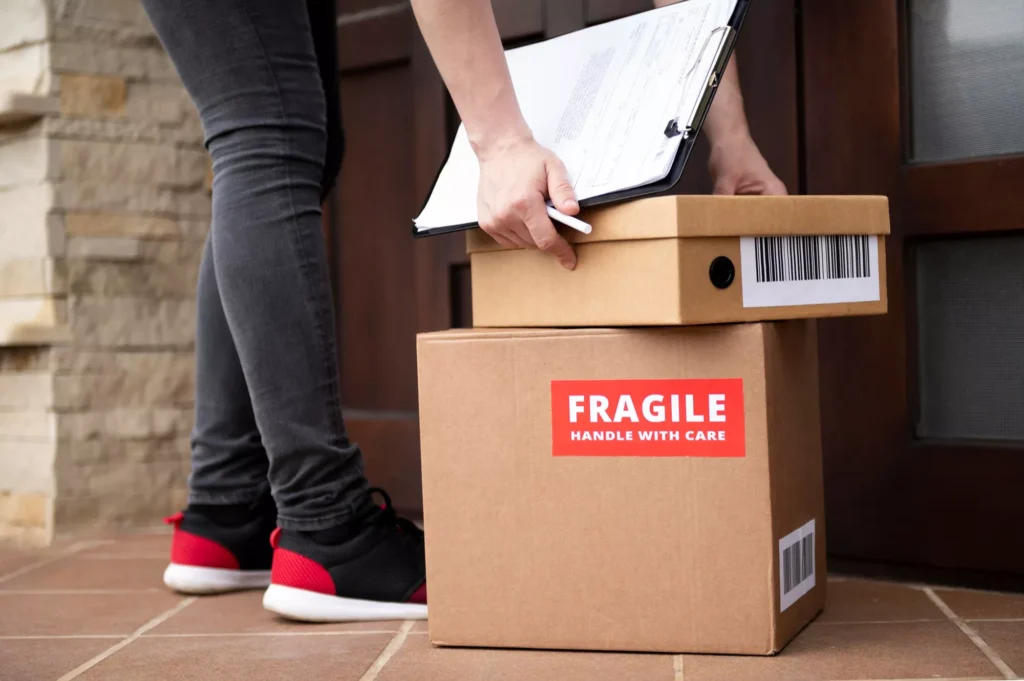
Label “FRAGILE + THIS SIDE UP” accurately
Accurate labels reduce handling mistakes and improve placement decisions during unloading.
Protect corners and edges
Frames, mirrors, and furniture fail at corners first. Corner protection prevents impact damage in doorways.
Keep fragile boxes out of the “crush zone”
Fragile items should never become the bottom layer under heavy boxes. Plan stacking by risk, not speed.
Fragile Packing Checklist (Before, During, After)
Before packing fragile items
- Create a “fragile zone” in your home to pack consistently.
- Gather correct materials (paper/bubble, tape, markers, strong boxes).
- Plan an “Open First” box for arrival essentials (chargers, toiletries, basic kitchen items).
- Set aside valuables/documents (do not load).
During packing
- Reinforce box bottoms with tape and padding.
- Wrap each item individually and prevent contact.
- Pack heavy fragile items in smaller boxes.
- Fill all voids so nothing moves.
- Label clearly: room + FRAGILE + THIS SIDE UP + priority tier.
Moving day and delivery
- Keep fragile boxes grouped and handled intentionally.
- Do not stack heavy items on fragile boxes.
- Place fragile boxes directly into the correct rooms (avoid hallway piles).
- Open and inspect the highest-risk items early.
Frequently Asked Questions (Packing Fragile Items)
1) What is the safest way to pack dishes?
Wrap each dish individually, pack plates vertically, cushion the bottom and sides, and fill voids so nothing moves.
2) Should fragile items go in big boxes?
Usually no. Heavy fragile items in big boxes are more likely to crush and break. Use smaller boxes to control weight.
3) What does “this side up” actually help with?
It reduces orientation mistakes that cause tipping, pressure points, and crushed corners—especially for framed pieces and electronics.
4) How do you pack a TV without the original box?
Protect the screen surface, add cushioning and corner protection, keep it upright, and avoid pressure from other items.
5) Is bubble wrap enough by itself?
No. You still need a strong box, reinforced bottom, and void fill so items can’t move or crush.
6) Should you use professional packing for fragile items?
It’s often worth it for fragile/high-value categories because packing quality drives damage risk. Use: Professional Packing Services.
7) How do you prevent fragile boxes from being crushed in the truck?
Group fragile boxes together, keep them out of the bottom layer, and avoid stacking heavy items on top. Plan stacking by risk, not convenience.
8) What should you read next for overall move planning?
Start with: Interstate Moving Guide and Choosing the Best Moving Company.
Direct Pro Logistics: Safety-First Handling for Fragile Items
Direct Pro Logistics supports safety-first moves by focusing on protection habits that reduce preventable damage: careful handling, clear packing standards, and controlled placement during delivery. If your move includes fragile or high-value items, aligning the packing approach early is the simplest way to reduce risk.
To plan a protection-first move, reach out via Contact Us and review Professional Packing Services.