Warehousing and distribution services are the backbone of a reliable supply chain. They provide secure storage for your inventory, organized handling of inbound and outbound goods, and efficient distribution to customers, stores, or production sites. When designed correctly, warehousing and distribution turn logistics from a cost center into a competitive advantage.
This guide explains what warehousing and distribution services include, the main types of facilities, and how providers like Direct Pro Logistics help businesses manage inventory and get products where they need to go on time. It is written for manufacturers, importers, retailers, and e‑commerce brands that need structured logistics support.
What Are Warehousing and Distribution Services?
Warehousing and distribution services combine storage, inventory management, and outbound shipping into one integrated operation. A warehouse receives goods from suppliers or production sites, stores them safely, and then prepares and ships orders as demand arises. Distribution adds the planning and execution needed to move those goods efficiently across regions and channels.
On Direct Pro Logistics, this topic should connect directly to Warehousing & Distribution, Freight Forwarding, Last Mile Delivery, and E‑commerce Fulfillment pages so visitors see how storage and transport work together.
Core Functions of Warehousing and Distribution
Receiving and Put‑Away
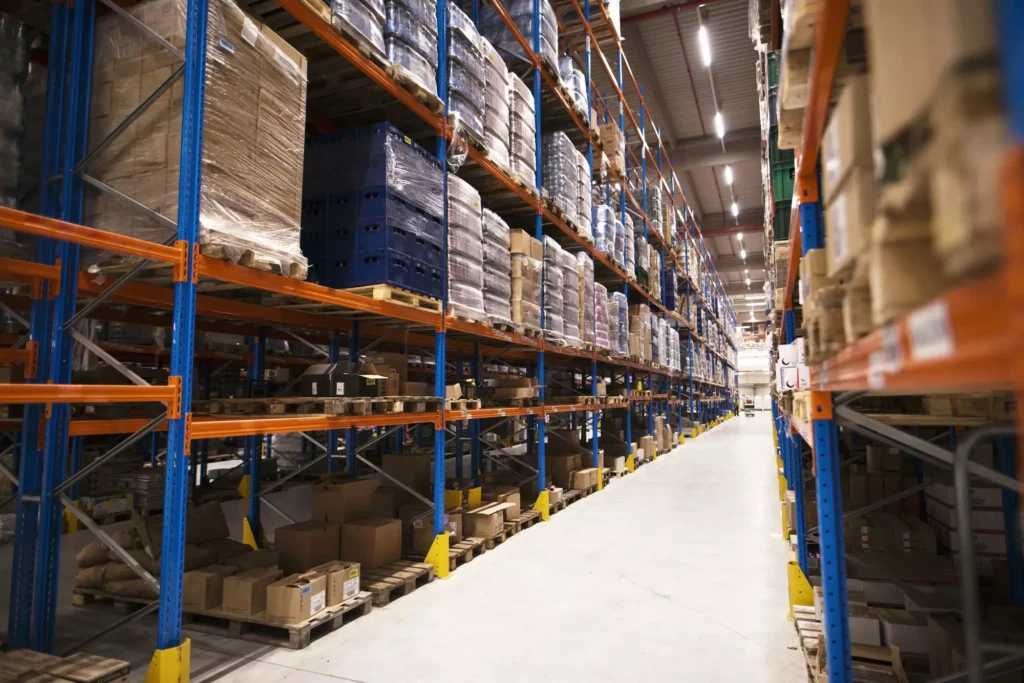
Warehousing starts when inbound shipments arrive at the facility. Staff or automated systems unload goods, check them against purchase orders, inspect for damage, and update inventory records. Products are then put away into designated locations—racks, bins, floor space, or temperature‑controlled zones—so they can be found quickly when needed.
Storage and Inventory Management
During storage, the warehouse maintains accurate stock levels, tracks lot or batch numbers, and applies strategies like FIFO (first‑in, first‑out) or FEFO (first‑expired, first‑out) where necessary. Inventory management systems record every movement so you know what you have, where it is, and how quickly it is turning over.
Order Picking, Packing, and Shipping
When orders come in, warehouse teams pick the right items from storage locations, pack them securely, and prepare shipping labels and documentation. Distribution planning then determines which carriers, routes, and service levels to use so orders arrive on time and at the right cost.
Six Benefits of Professional Warehousing and Distribution Services
Outsourcing warehousing and distribution to a logistics specialist often delivers better service and lower total cost than trying to run everything in‑house—especially for growing companies and multi‑channel brands.
Strategic Inventory Positioning
Placing inventory closer to your customers reduces delivery times and shipping costs, helping you offer faster service without sacrificing margins.
Scalable Capacity
As volumes grow or fluctuate seasonally, a professional warehouse can scale space, labor, and equipment without you adding long‑term fixed costs.
Improved Accuracy
Standardized processes and inventory systems reduce picking errors, stockouts, and discrepancies between physical and system quantities.
Better Customer Service
Faster, more reliable order fulfillment leads to fewer complaints, more repeat orders, and stronger relationships with customers and distributors.
Integrated Transport Options
When warehousing is combined with freight and last mile services, you gain smoother handoffs, simpler communication, and more predictable lead times.
Focus on Core Business
Outsourcing storage and distribution lets your team focus on product development, sales, and growth instead of day‑to‑day warehouse operations.
Types of Warehousing and Distribution Models
Different businesses need different warehousing setups. The right model depends on shipment volume, product mix, and how quickly orders must move.
| Model | Description | Pros | Best For |
|---|---|---|---|
| Public / Shared Warehouse | Space and labor shared among multiple clients in one facility. | Flexible, pay‑as‑you‑go costs; easy to scale up or down. | Small and mid‑sized businesses with variable volumes. |
| Contract Warehouse | Dedicated space and services under a medium‑ or long‑term agreement. | Customized operations and deeper integration with your processes. | Companies with stable or high volumes that need tailored workflows. |
| Distribution Center (DC) | High‑throughput facility focused on rapid cross‑dock and order fulfillment. | Fast order processing, ideal for time‑sensitive and high‑velocity products. | Retailers, e‑commerce brands, and fast‑moving consumer goods. |
| Fulfillment Center | Warehouse specialized in picking, packing, and shipping individual orders. | Optimized for small parcels and multi‑channel fulfillment. | Direct‑to‑consumer brands and online marketplaces. |
On Direct Pro Logistics, this section can direct visitors toward your Warehousing & Distribution, E‑commerce Fulfillment, and Freight Forwarding pages, depending on their needs.
How to Design a Warehousing and Distribution Strategy
Map Your Demand and Service Levels
Start by mapping where your customers are and what delivery promises you need to keep. This helps determine how many warehouse locations you need, where they should be, and what inventory each site should hold.
Define Inventory Policies
Decide which products are stocked, which are made‑to‑order, and what safety stock levels are required. Clear policies reduce both stockouts and excess inventory, keeping working capital under control.
Integrate Transport and Last Mile
Warehousing design should account for how goods arrive and how they leave. Integrating your warehouse with freight forwarding, line‑haul, and last mile delivery creates smoother flows, better tracking, and more predictable lead times.
FAQ: Warehousing and Distribution Services
You can reuse this FAQ on your Warehousing & Distribution, E‑commerce Fulfillment, and Logistics pages.
1. What is the difference between a warehouse and a distribution center?
A warehouse primarily focuses on storage, while a distribution center focuses on fast movement—receiving, processing, and shipping orders quickly. Many modern facilities combine both functions, but the main difference is speed and throughput.
2. How do warehousing and distribution services help reduce shipping costs?
By placing inventory closer to customers and consolidating shipments, you can use shorter, cheaper transport lanes and reduce express shipments. Better route planning and carrier selection also cut unnecessary costs.
3. Can I store both pallets and individual items in the same facility?
Yes. Many warehouses support mixed storage—bulk pallets for wholesale or B2B orders and bin or shelf storage for smaller, each‑pick orders. The layout depends on your product mix and order profiles.
4. What information do I need to get a warehousing quote?
Typically you’ll need product dimensions and weights, average inventory levels, inbound and outbound volumes, order profiles (B2B vs B2C), and any special requirements such as temperature control or hazardous materials handling.
5. Can warehousing and distribution services support e‑commerce and retail at the same time?
Yes. A well‑designed operation can fulfill store replenishment, wholesale orders, and direct‑to‑consumer parcels from the same facility, using different picking and packing processes for each channel.
6. Do I need long‑term contracts to use a warehouse?
It depends on the model. Public or shared warehouses often offer flexible, volume‑based terms, while contract warehousing typically uses multi‑year agreements to support higher customization and dedicated resources.
7. How do I get started with warehousing and distribution through Direct Pro Logistics?
Begin by sharing your inventory profile, order volumes, and target service levels through your Warehousing & Distribution, Contact, or Get a Quote page. From there, Direct Pro Logistics can propose a storage and distribution setup that aligns with your growth plans and cost targets.